Title: 1177 B.C.E. The Time Civilization Collapsed
Author: Eric H. Cline
Pages: 188

Hi all,
I have finally managed to get around to this book after having delayed to read it a few times already. Today I can finally share it with you. Before I get into the review I will mention that this book is apparently part of an upcoming collection of books that will be issued by Princeton in the future that are called “Turning Points in Ancient History”.
There are different reasons that drew me to read more about history, but question that really intrigued me was what had happened to all those kingdoms from the Bronze Age. The age from which we have that famous story from Homer’s book ‘The Illiad’; the story of Troy. Many different kingdoms were around at that time and then they just disappeared.
This book aims to give you an overview of which kingdoms ruled at that time period, what relations they had with each other and what of the stories are truth and which might just be stories or myth. Not only will you add to your history knowledge of the antiquity, but you will also learn to draw parallels with the world we are living in today.
- Remember the phrase from Churchill: “The further you look into the past, the further you can look into the future”.
Especially in times of hardship it is advantageous to know and understand that even though we have better technology at our disposal, we are still vulnerable and can also suffer a collapse. I said it is advantageous, but I say we can perish. Yes, but the advantage lies in knowing that we are not invincible and that we should learn to live and adapt what life has to throw at us and not hold on too tight onto something that won’t help us survive in the future.
We need to learn to adapt and know that this is the better path if we wish to get the best out of life.
The book is broken down into the following chapters:
- Prologue
- The author introduces you to the topic of the book, namely the fall of civilizations at 1177 BC. What caused it, who is responsible and why did it happen all so suddenly?
- These are the questions the author wishes to address as we delve into the history of the different civilizations that existed in the periods from the 15th century – 12th century BC.
- Long before the blame was given to a people (called the Sea People) alone because in one Egyptian tomb that was excavated it was told that a threat had come from the sea in 1207 BC and then again 1177 BC.
- You may be asking why we are starting our journey in the 15th century when in fact the doomsday is given as 1177 BC. Well, the author believes that a problem didn’t appear suddenly out of the blue, but rather that it must have grown over the periods and then a significant blow caused everything to be hit significantly. Some were hit so hard that their civilization disappeared completely, whereas some were hard hit but managed to survive, only in a weakened state.
- Act 1 Of Arms and the Man: The 15th Century BC
- 1477 BC Thutmose III ordered the construction of a temple and it included frescoes in it that were of Minoan making. This evidence suggests that Egypt was already on good trading terms with the Minoans (island of Crete) at this time.
- Further, after Egypt had been invaded by the Hyksos in 1720 BC they were overthrown in 1550 BC which then brought forth the start of the New Kingdom. The overthrow was possible since the Egyptians adopted some of the technology that the Hyksos brought with them and made them superior to the Egyptians.
- The Minoans were somewhat a central trading hub for the various Great Powers (Myceneans, Egyptians, Ugarit, Canaan, Babylon and multiple others in the Near East). They came to existence around 3000 BC and always were a flourishing country. Even after suffering from an earthquake or volcanic eruption on nearby island it rebuilt itself. However, it was soon (1450 BC) overtaken by the rising power of the Myceneans.
- Next to the texts giving away that there was interaction between Egypt and its neighbours, other evidence is also available from the temples and tombs.
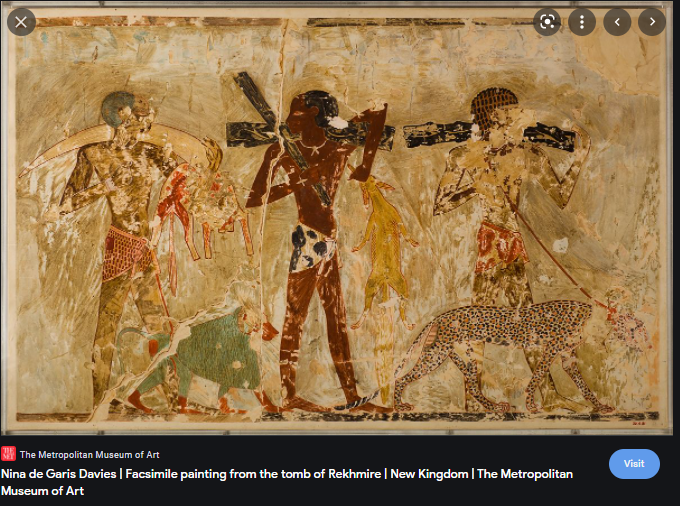
- Egypt had diplomatic relations with its neighbours but also fought fierce battles to retain the borders. One famous battle fought by Thutmose III with Canaanite chiefs went down in history as the battle of Megiddo.
- He also led battles against a rival kingdom that arose around 1500 BC in Syria region, known as the Mitanni. Battles were fought for a long time but sometimes tensions were settled when kings decided to sign for peace instead, which was often sealed with one marrying a princess from the other kingdom.
- Another record, this one from Anatolia, tells of the Arzawa Rebellion where kingdoms in the western Anatolia region launched a rebellion against their overlords, the Hittites in 1430 BC.
- Act 2 An Aegean Affair to Remember: The 14th Century BC
- Another piece of evidence that shows the interconnectedness of the different kingdoms at the time is at the foot of one of the statues of the pharao Amenhotep III, called the Aegean List
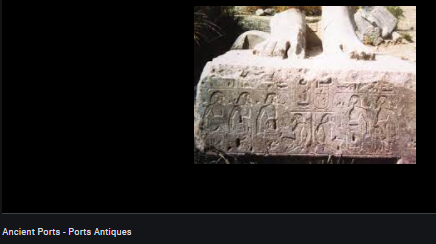
- It lists the different kingdoms with whom the king has had contact and trade with and includes: Hittites (Anatolia), Nubians (Sudan region), Assyrians (east from Anatolia and west from Mitanni), Babylonians (Mesopotamia), Mycenae (Greece), Nauplion, Knossos (Minoan), Kydonia and Kythera.
- The way in which contact with Egypt was confirmed in other locations was the discover of texts, but also of pottery and other goods that had been inscribed with the cartouche (royal name) of the ruling pharao of Egypt at the time.
- When the different kingdoms communicated with one another they used the Akkadian language and wrote down their correspondence using cuneiform writing system.
- During this age is was that King Tutankhamen became ruler of Egypt at a young age and only ruled for a decade before he deceased. Having fathered no son, it is speculated that his then queen wife Nefertiti had written a letter to the king of the Hittites (king Suppiluliuma I) asking for one of his sons to become her husband and the next pharao. At first he didn’t believe the request to be true but when it was confirmed he sent his fourth son (prince Zannanza) on his way. Sadly, he never made it to Egypt as he had been ambushed on the way. The king, not believing the Egyptians were innocent in this, sent some of his forces to Canaan to conquer some of their territory. A short time later the king died of an illness that the prisoners had brought with them.
- This went down into history as the Zannanza Affair.
- Act 3 Fighting for Gods and Country: The 13th Century BC
- A famous battle that went down in history is the battle of Qadesh, which was fought between king Muwattalli II (Hittite) and Ramesses II (Egypt) in 1274 BC and was initiated from the northern kingdom that was determined to expand his borders southwards. The battle ended in a stalemate and was concluded with the signing of a peace treaty.
- The signing of the peace treaty came at no better time since both kingdoms would be facing two significant events in the upcoming years. In Anatolia, one of the north-western kingdoms would be engaged in a 10-year battle with the Myceneans, which went down as the Trojan War, whereas the Egyptians would be facing an Exodus of people from its lands, which is the Exodus told in the Bible with Moses leading his people to the holy land.
- Whether the Trojan War really happened or not is up for speculation since it was only written down in around 9th century BC by Homer and seems to include stories that weren’t necessarily separated by a few years, but sometimes possibly even a few decades. Therefore, this is still something that is being debated over.
- Two kingdoms would come to an end in this period. The Hittites and the Mitanni. Both were brought down by the Great Power of the Assyrians who had become a stronger force after having been a dormant kingdom for a few years.
- The last rulers of the Hittite kingdom were Tudhaliya IV (1237- 1209 BC) and Suppiluliuma II (1209 – … BC) who had hoped to emulate their forefathers by having engaged in conquests to try and win over more territory for their kingdom.
- Act 4 The End of an Era: The 12th Century BC
- This chapter goes into the texts that were discovered in some kingdoms on the Syrian coastal kingdoms (Ugarit for one). It is apparent from these texts that they ran their kingdoms the same they had run it before, right until when no texts were written anymore.
- The author brushes through evidence that was discovered at different sites in Canaan kingdoms to find out whether any record points to a Sea People being responsible for the destruction of the kingdom. The texts are not very helpful in many cases as it is mostly not recorded what caused the cessation of the kingdom, if it was recorded at all. Some sites were found to have been hit by earthquakes or no damage at all (except to palatial and public buildings) but rather complete abandonment.
- In some cities it was found that the peoples even rebuilt over the old ruins (sometimes multiple times) so determining which construction was from which era proved to be difficult to determine.
- A “Perfect Storm” of Calamites?
- Next to the possibility that a people alone was responsible for the destruction of the civilizations of the Bronze Age, the author also looks into other events that happened around the same time that could have contributed to bring down the collapse:
- Foreign invaders
- Earthquakes
- Drought
- Famine
- Internal rebellion
- Decentralization and rise of private merchants
- Disease
- Climate change
- Next to the possibility that a people alone was responsible for the destruction of the civilizations of the Bronze Age, the author also looks into other events that happened around the same time that could have contributed to bring down the collapse:
- Sea Peoples, Systems Collapse, and Complexity Theory
- The author then tries to combine the evidence that is available to us to analyze it with the help of complexity theory to try and pinpoint who was the ultimate culprit.
- The conclusion, we don’t have sufficient conclusive evidence to confirm that either one of the possibilities discussed earlier resulted in the collapse on their own, but their combined effect would have been more probable.
- The Aftermath
- We have discussed the history from 1500 BC until 1200 BC and looked at the different civilizations that existed then and what their relations were with each other. The kingdoms were large and significant Great Powers that were very interconnected and interdependent upon each other.
- It was this very interdependency that made the whole network vulnerable to collapse at the slightest breaking point.
- This message is what the author boils down how relevant it is to our history today. Our countries are once again interconnected and interdependent from and with each other that the causation of damage at any point could cause significant effects for the whole globalized world economy.
Summary:
The book delivers a good history lesson of different eras and makes it relevant to times of today when we are also facing many different hardships at once. I am not predicting that the end is imminent, but merely that knowing we are always vulnerable and being willing to adapt is the message. Getting this message is the crucial part. The book receives a rating of 4.65/5.
I hope you enjoy this as much as I could!
All the best!!! 🙂
 MyBookReviews
I am deeply fascinated by ancient history and especially by the history of the late bronze age.
I liked this book very much and I used it as the main historical source for a story I wrote. On YouTube, I even found some lessons delivered by Eric Cline himself, which now are in my favorite list.
If you like history of the late Bronze Age, may I suggest the two YouTube channels “History Time” and “Fall of Civilizations”? They both have interesting and through videos about the Bronze Age collapse and the sea peoples.
LikeLike
Hi, there. That sounds terrific that this books served you well for your own book. I have also seen one of his lectures on YouTube, which resulted in me wanting to buy this book and read up on this aspect of history.
I hope that my summary/review was written understandably well enough that you could follow each part of the chapters?
I haven’t heard of those two channels before, but I’ll definitely also have a look at those. Another channel I found some interesting content (especially Egypt) was from Odyssey.
Thank you for the comment, and if you have any books that you can recommend that I can add to my blog I would definitely look into it. If you browsed through my summaries you may have noticed that I cover a wide range of genres. Thus, any recommendations are most welcome.
LikeLiked by 1 person
Your post was great, a really good summary!
I will wander through your blog and see whether I have any suggestions for books to add 🙂
LikeLike
Thank you very much. It was tough to break down what I should include in the blog and what not, but I really want to include as much as I can to make it well understood and attractive to read.
Thank you, I look forward to them.
LikeLiked by 1 person
Do you know Candide by Voltaire? It would be great since you reviewed the social contract by Rousseau.
LikeLike
I haven’t, but I’ll add it to my list. I can also recommend 029-2021, 014-2021, 006-2021 and 039-2020. They were quite interesting.
LikeLiked by 1 person
thank you!
LikeLike